start your heavy to fit strength journey today
BioFitness Systems was originally incorporated by Steven Zeigman in South Carolina in 1984 with the purpose to be an innovator in Strength is Health efficacy through Managed Strength Care
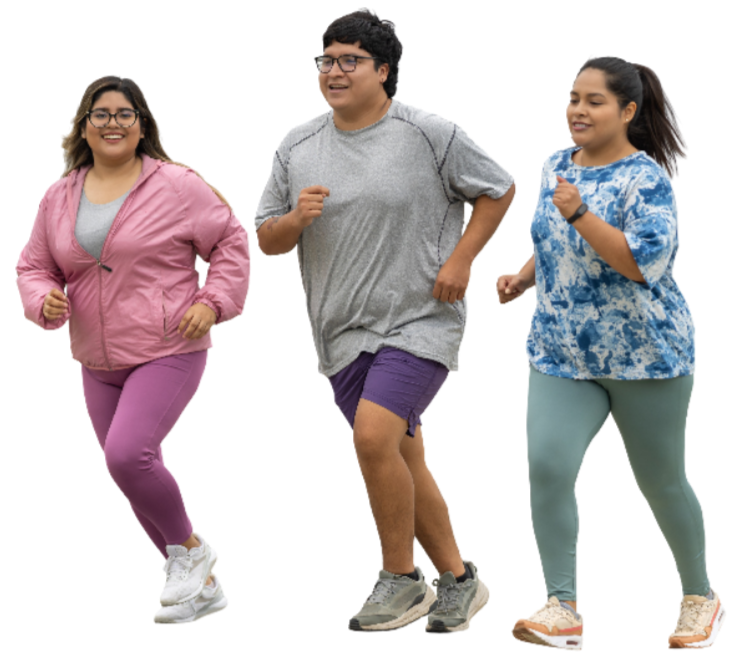

 BioFitness for Heavy & Unfit can quickly change unhealthy strength deficit into a Heavy & Fit, healthy muscle strength asset, by addressing the root cause of the unfitness...disproportional strength to bodyweight imbalance...which can be positively changed to lower "Health Risk-Factors" using muscle strength increase with or without weight loss...when done right!
See White Papers: What’s Been Discovered & Weight Loss & Strength for reducing risk-factors & Summary
Here’s how it works! A person lowers risk factors when they lose body fat because their heart and body muscles become stronger relative to the lighter total bodyweight. Likewise, when a person becomes stronger, without losing body fat, they also reduce risk factors by becoming stronger relative to the unchanged total bodyweight.
BioFitness reduces risk factors by pre-planning Strength Prescriptions designed to fit and deliver on timetables, enabling the high risk Heavy & Unfit to know, in advance, exactly how many weeks it will take to become Heavy & Fit, with muscle strength health from 3 weekly sessions of 15 minute or less.
The difference between Biofitness PRISM A.I.™ and other systems is that the BioFitness PRISM A.I.TM system predicts your absolute optimized strength gain, ahead of time and then builds your personalized strength health plan to reach your gain on a scheduled and assured timetable, including the exact number of Sets, Reps, and amount of Weight(s) for safe success.
If you would like access to BioFitness prescriptive exercise, with assured, on-time
strength gains, contact the BioFitness Institute.
 Deltoids
Biceps
Hand Flexors
Lower Back
Quadriceps
Hamstrings
Adductors
Abductors
Glutes
Gastroc
Soleus
Deltoids
Biceps
Hand Flexors
Lower Back
Quadriceps
Hamstrings
Adductors
Abductors
Glutes
Gastroc
Soleus
The High Pull is a large % of the major muscles of the body. The "triple extension" of the ankle, knee and hip joints involve the calf plantar flexor muscles (gastroc and soleus), knee extensors (quadriceps), and hip extensors (hamstrings and gluts). The torso is stabilized by the quadratus lumborum and spinal erectors. The traps control the final "shrug" with the deltoids and elbow flexors assisting.
You also have muscles active isometrically to maintain the grip on the bar. Most of the above are muscle groups, so if you count them individually you have dozens of muscles throughout the body involved in the high pull. Thus, I call it a total body exercise.
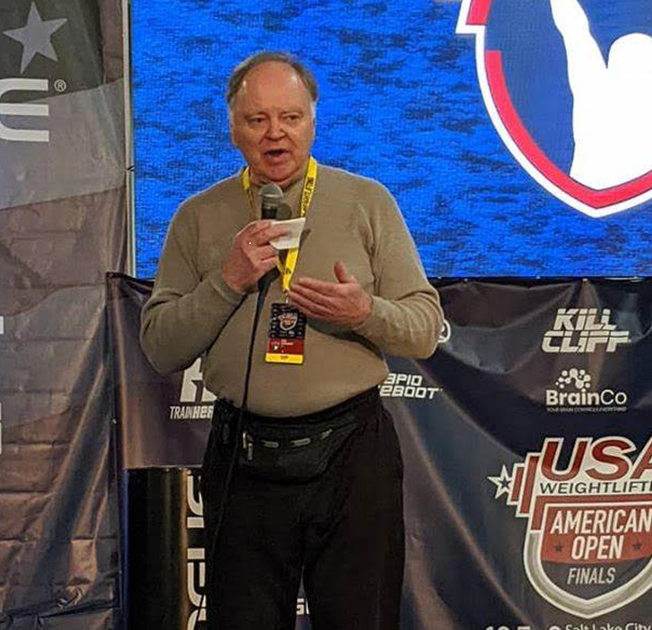
Dr. John Garhammer, PhD, Exercise Kinesiologist and former consultant to the US Olympic Training Center Sports Medicine Program, specialist in Bio-mechanics